 KEYFACT Energy
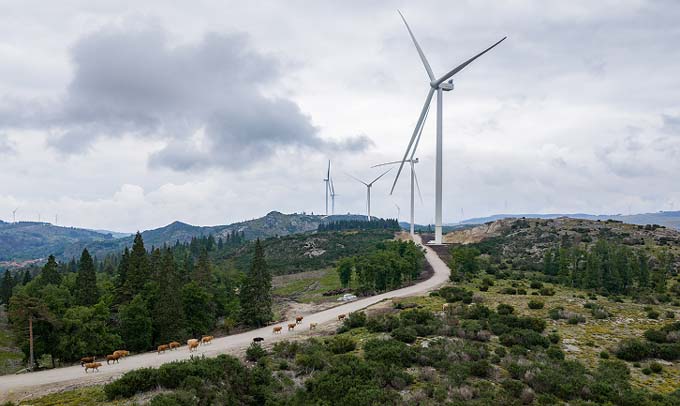
- The facilities will form part of the first hybrid wind-hydro development connected to the grid in the Iberian Peninsula
- The completion of the Tâmega Norte wind farm project is entering its final stage
Iberdrola is further consolidating its leadership in renewable energy with the commissioning of the Tâmega Norte wind farm, located between Braga and Vila Real, within the Portuguese municipalities of Cabeceiras de Basto and Montalegre. This is the first of two wind farms that make up the Tâmega Complex . It is the first hybrid wind-hydropower project connected to the grid on the Iberian Peninsula . It will consist of two wind farms (north and south) linked to a large pumped-storage hydroelectric system . This combination allows both technologies to complement each other and store energy for release when the grid demands it.
From a technical and operational point of view, hybridization facilitates the sharing of grid connection infrastructures, reduces environmental impact and improves the stability of the electrical system by accelerating electrification.
Tâmega Norte will have a capacity of 195 MW, distributed across 27 state-of-the-art Vestas wind turbines, each with a capacity of 7.2 MW and a rotor diameter of 172 meters, making it one of the onshore projects with the most powerful turbines installed by the company. Its construction has been challenging due to weather and environmental conditions during the breeding season of certain species, which significantly impacted the construction schedule during the spring and summer months. During peak construction periods at the Tâmega Norte wind farm , there was a significant impact on employment , reaching approximately 150 people, including personnel in transportation, installation, crane operation, health, safety, and environment (HSE), external supervision, and Vestas staff.
Connection via REN
The Tâmega Norte plant will generate approximately 414 GWh annually, while the Tâmega Sul plant, currently under construction, will generate 185 GWh. The energy will be evacuated using the complex's existing infrastructure. The connection is made via the National Electricity Network (REN) node in Ribeira de Pena: north from the Daivões substation, and south from Gouvães.
The total investment associated with the two wind farms amounts to €346 million (TOTEX), of which €237 million corresponds to Tâmega Norte and €109 million to Tâmega Sur. Their development has involved significant participation from international and national suppliers, including Haizea Wind, a Basque group specializing in the design, manufacture, and assembly of metal structures and cast components for the wind energy industry, through its subsidiary HaizeaTecnoaranda, as a supplier to Vestas, a leading Danish wind turbine manufacturer. Vestas also has a research and development (R&D) center based in Porto. In addition, Portuguese civil engineering firms have participated in the project.
The Tâmega wind farms will prevent the emission of more than 230,000 tons of CO₂ per year , a figure equivalent to the annual absorption of millions of trees or the annual emissions of approximately 100,000 vehicles.
The project has been developed in strict compliance with all the conditions defined in the environmental permit . Iberdrola is implementing preventive, corrective, and compensatory measures, as well as monitoring programs, to minimize the environmental and socioeconomic impact.
The complex has financing from the European Investment Bank (EIB) and the participation of Norges Bank, in alliance with Iberdrola, which will control 49% once it becomes operational.
State-of-the-art technology
One of the most unique aspects of the project has been the use of BladeLifter technology for transporting blades of considerable size. The complexity lies not only in their length but also in the environment: tight curves and steep sections.
The BladeLifter has allowed the blade to be raised between 25 and 30 degrees in Tâmega Norte, facilitating passage along narrow roads without the need to widen roads or carry out major civil works. This solution reduces the impact on rural areas and avoids unnecessary alterations to the landscape.
The success lies in the professionals who carry out the work and who have extensive experience operating these technologies. Each truck requires three professionals who work as if they were a single brain. Coordination is constant, supported by continuous radio communication. One drives, another controls the rotation and tilt of the bucket—capable of rotating 360 degrees—and a third supervises the leveling and stabilization of the entire unit.
KeyFacts Energy: Iberdrola Portugal country profile