 KEYFACT Energy
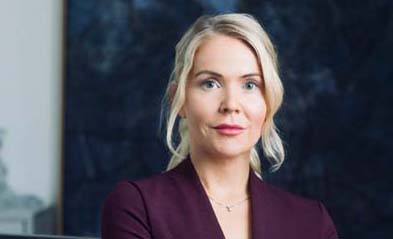
Christel Kvalvik Director and Location manager, Equinor
Equinor recently updated its strategy with a clear ambition: maintain strong production from the Norwegian Continental Shelf while building the businesses that will drive long-term growth in the future.
The ambition is clear. But so is the challenge.
The remaining resources on the NCS will not be developed because they are easy. They will be developed because the entire value chain is competitive enough to make them attractive investments.
After my first two months in Equinor Øygarden, one thing has become increasingly clear to me: what we do onshore is already influencing what is possible offshore.
The remaining barrels are no walk in the park
I have spent the last years trying to maximise production and develop new resources across the NCS. One thing I know is that this is not getting easier.
New wells in ageing reservoirs are challenging to deliver. Marginal tie-backs are difficult to make profitable. And discoveries that once seemed too small or too complex are now moving up the priority list because they are among the few opportunities left to sustain production over time.
The remaining barrels on the NCS will not come easily. And they will not come for free.
From value chain to investment case
Onshore facilities have always been a critical part of the value chain. In recent years, they have also become essential infrastructure for reliable energy supply to Europe.
But what has struck me since coming to Øygarden is that the role of these facilities is evolving. Traditionally, offshore created value and onshore processed it. Increasingly, the relationship goes both ways: As projects become smaller, more complex and more cost-sensitive, competitiveness matters across the entire value chain. Processing tariffs are rarely the largest cost element in an offshore project, but they are becoming increasingly important.
That means how we operate – our regularity, flexibility, energy efficiency and cost discipline—can directly influence whether resources are developed or left in the ground.
In some cases, onshore performance may even influence whether a project is attractive enough to move forward.
What this means for us at Equinor Øygarden
At Equinor Øygarden, I think we are only beginning to understand what this could mean in practice. What gives me confidence is what I see every day at Sture, Kollsnes and Northern Lights.
I see deep technical competence. Strong operational experience. Commercial understanding. And a genuine drive to improve. But perhaps most importantly, I see people who care about what comes next. For the industry. For the local communities around us. And for future generations who will work here.
For me, this is about more than producing volumes. It is about creating the basis for future activity, future investments and future jobs.
That is why I do not think we should wait for future volumes to arrive. We should become the facilities that help make them attractive enough to be developed.
Original article l KeyFacts Energy: Equinor Norway country profile