 KEYFACT Energy
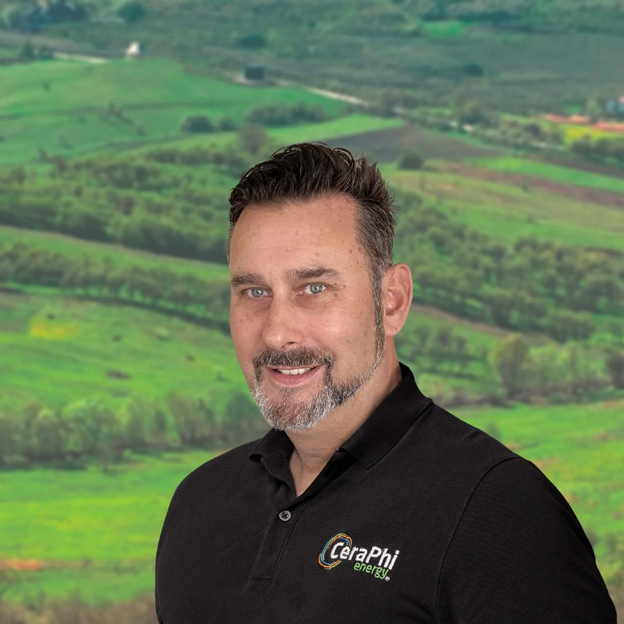
Karl Farrow is the Founder of CeraPhi Energy, a geothermal energy development company, as well as a technology investor, entrepreneur, and Non-Executive Director (NED). With more than 40 years of international experience in the energy sector, he has built a proven track record of creating and scaling successful businesses, from bespoke innovation and R&D programmes through to complex commercialisation and go-to-market strategies.
Karl has led project development, execution, and technology advancement across multiple energy markets, combining technical expertise with commercial acumen to deliver sustainable growth and long-term stakeholder value. He has cultivated a strong international network of political, governmental, and commercial stakeholders, providing strategic insight into energy policy, energy security, and the investment frameworks required to accelerate the transition to a more sustainable future.
As the author of Punk Rock to Geothermal Shock, Karl draws on a lifetime of experience building and investing in sustainable energy projects, innovative start-ups, and emerging technologies. His expertise spans project financing, technology development, funding solutions, and market-entry strategies that transform innovative ideas into scalable, commercially successful businesses.
A passionate environmentalist and advocate for sustainability, Karl remains committed to advancing technologies and policies that support a cleaner, more resilient energy future. Outside of business, he is a keen guitarist and music enthusiast, reflecting the entrepreneurial spirit and creativity that have shaped his career.
Karl Farrow Q&A
You’ve spent over 40 years in the global energy sector, from offshore fabrication workshops to influencing policy at Westminster and Capitol Hill. Looking back, what moments most defined your journey?
Looking back, the defining moments were not really captured by single events, but rather by the journey itself—gaining understanding and perspective, building resilience, and developing a sense of purpose that was bigger than myself. I suppose that has been the defining aspect of my career.
It started when I began my apprenticeship, which gave me a grounded understanding of hard work and discipline. Working offshore and across major international energy projects exposed me to the realities of global energy dependence, the importance of energy in shaping economies, and the barriers to energy access faced by developing countries.
That led me to want to build things of my own, to challenge and question why things were done a certain way, and to look for better approaches. In doing so, I learned that leadership is tested most during adversity, not success. One of the biggest turning points came when I began to recognise the direct connection between energy, climate change, and inequality. Travelling extensively and witnessing both abundance and energy poverty changed my thinking profoundly.
It was also during this time that I realised I had a talent for networking—getting into the right rooms, participating in the right discussions, and helping to influence those conversations. Whether in a project meeting, a boardroom, a high-level diplomatic setting with government officials, or at Westminster or Capitol Hill, these experiences gave me a platform to develop and promote my own narrative within the energy landscape—one that extended beyond politics and short-term economics.
Ultimately, CeraPhi has become the culmination of everything that came before, combining industrial experience, sustainability, and innovation into a mission focused on delivering affordable, reliable heat as a service, while helping to build a cleaner, more secure energy future for generations to come.
Having lived in six countries and travelled to more than 100, how have those global experiences shaped your worldview on energy, sustainability, and humanity?
I have been very fortunate to experience so much across the globe. I have seen extraordinary wealth and innovation alongside communities still struggling with unreliable power, unsafe heating, or no access to energy at all, often in regions affected by war and conflict. Those experiences taught me that energy is not simply an economic issue; it is fundamentally tied to dignity, opportunity, education, health, and social equality.
Travelling extensively has reinforced how interconnected humanity really is. Climate change, resource scarcity, and energy security are not isolated national issues; they are shared global challenges that require cooperation and long-term thinking. Different cultures taught me the importance of adaptability, humility, and listening. Some of the most valuable lessons I learned came not from boardrooms, but from people working in remote communities or challenging environments who found ways to survive and innovate with very limited resources.
These experiences shaped my belief that sustainability must be practical and inclusive. Clean energy cannot remain a luxury available only to wealthy nations. That belief has become both a mantra and a mission. It is what we set out to change with CeraPhi Energy. Our focus has been on creating scalable geothermal solutions capable of delivering affordable heating and cooling globally, while addressing energy poverty and supporting a more balanced relationship between industry, society, and the environment.
You describe yourself as both an environmentalist and someone who built a career in oil and gas. How do you reconcile those two worlds, and how has that perspective evolved over time?
I have never viewed environmentalism and oil and gas as mutually exclusive. My career has given me firsthand insight into how essential energy is to modern civilisation, but it has also exposed me to the environmental consequences of relying heavily on fossil fuels. Rather than viewing the industry as the enemy, I saw it as an evolving sector that needed to adapt responsibly and use its engineering expertise to drive better solutions.
Early in my career, the focus was primarily on energy security, industrial growth, and economic development. Over time, witnessing the effects of climate change across different regions of the world significantly changed my perspective. I saw increasing environmental pressures, shifting weather patterns, and the growing impact of energy inequality on communities. This led me to believe that the future of energy must balance reliability, affordability, and sustainability.
My experience in oil and gas ultimately became an advantage because it taught me how large-scale infrastructure, engineering, and global energy systems operate. Those lessons became the foundation for CeraPhi and our mission to scale closed-loop geothermal technology globally. I believe the energy sector requires rebalancing, and that this can only succeed if we work together—not by creating conflict between industries, but by applying existing industrial knowledge to develop cleaner, more resilient, and socially responsible energy systems that can genuinely improve lives.
You’ve spoken openly about discovering your dyslexia later in life and turning it into a “superpower.” How did that shape your entrepreneurial mindset and leadership style?
I now know I’m not alone; I expect many people discover they have dyslexia later in life. For me, it answered many questions about why I approached problems differently from others. At school, traditional education systems never really suited me, and for years I assumed I simply had to work harder to compensate. Over time, however, I realised that dyslexia gave me strengths that became invaluable in business and leadership. It taught me to solve problems differently, think visually, adapt quickly, trust my instincts, and approach challenges creatively rather than conventionally.
Because I struggled with traditional academic structures, I became highly resourceful and resilient. I learned to simplify complex challenges into practical solutions and to focus on people, communication, and vision rather than process alone. Dyslexia also made me more comfortable with uncertainty and risk because I had already spent much of my life navigating systems that did not naturally align with the way I think.
As a leader, it shaped my belief that diversity of thought is essential for innovation. I actively encourage unconventional perspectives because breakthrough ideas rarely come from people who all think the same way. Building a new type of energy company required exactly that mindset—challenging established assumptions within the energy sector and finding practical new approaches to delivering sustainable heat and energy services globally.
What others once viewed as a weakness became one of the greatest strengths of my entrepreneurial journey.
Your phrase, “What you lack in resources, compensate with resourcefulness,” is powerful. Can you share a moment in your career where that philosophy truly defined the outcome?
I went through a difficult experience involving a serious misjudgement of character with a former business partner who ultimately received a suspended prison sentence for corporate fraud. The situation took me completely off guard. We were in the middle of a major scaling phase, and almost overnight, everything came crashing down. I faced every conceivable challenge: contracts were cancelled, cash flow came under immense pressure, banks became increasingly demanding, supplier relationships were damaged, personal relationships suffered, and ultimately the survival of the company was at risk.
We did not have access to major financial backing, but what I did have was integrity, determination, creativity, and the determination to keep moving forward.
Instead of focusing on what I lacked, I focused on what I had: a strong professional network, the trust of staff and clients, and a resilient problem-solving mindset. I engaged directly with suppliers and customers, working relentlessly to negotiate solutions and call in favours that would normally have been beyond reach. Every challenge forced me to become more innovative, more disciplined, and more resourceful. That resourcefulness helped transform what could have been a business collapse into a successful turnaround, ultimately enabling the growth of an international project management business operating across multiple continents.
The experience reinforced a lesson I have carried throughout my career: money alone does not create success. Vision, resilience, adaptability, and people create success. That philosophy also shaped my decision to enter the geothermal sector as a disruptive challenger, requiring us to think differently, use existing infrastructure creatively, and find scalable ways to deliver sustainable heat as a service.
Often, innovation comes not from abundance, but from the pressure to find smarter ways forward when resources are limited.
Before clean energy, your entrepreneurial journey included art, media, music promotion, quantity surveying, and international project management. What did those diverse experiences teach you about business and innovation?
Those diverse experiences taught me that innovation rarely comes from staying within a single discipline. Art and music taught me creativity, emotion, and the importance of connecting with people. Media and promotion taught me the power of storytelling and how to communicate ideas in ways that inspire action. Quantity surveying and project management taught me structure, commercial discipline, risk management, and execution. Together, these industries shaped a mindset that balances vision with practicality.
One of the biggest lessons I learned is that successful businesses are ultimately about people and adaptability. Markets change, technologies evolve, and industries transform, but the ability to build trust, communicate clearly, and solve problems creatively remains constant. Working across different sectors also gave me the confidence to challenge conventional thinking because I was not conditioned to view problems through a single lens.
That unconventional background became incredibly valuable when I moved into clean energy. Many industries operate in silos, but geothermal energy requires engineering, infrastructure, finance, communication, and policy to work together effectively. I have drawn on lessons from every stage of my journey, combining creativity with industrial experience to build CeraPhi Energy and help make sustainable geothermal heat scalable, accessible, and commercially viable for communities and businesses around the world.
What first drew you to geothermal energy, and why did it become the mission that ultimately consumed your professional life?
What first drew me to geothermal energy was its sheer old-school industrial simplicity. Beneath our feet lies an immense source of constant thermal energy, available 24 hours a day, regardless of weather or season. Yet globally, we continue burning finite fossil fuels simply to create heat, often at temperatures far higher than we ever intend to use. The more I studied the sector, the more I realised that geothermal had the potential to become one of the most important solutions for both decarbonisation and long-term energy security.

What transformed interest into obsession was recognising the scale of the global heating challenge. Heating and cooling account for a significant proportion of global emissions, while millions of people still live in energy poverty, unable to access affordable or reliable heat. I became convinced that solving heat infrastructure was just as important as solving electricity generation.
My background in oil, gas, and utilities infrastructure gave me a different perspective. I saw an opportunity to repurpose existing engineering expertise and well technologies towards sustainable energy solutions. The mission became clear: to create modular closed-loop geothermal systems capable of delivering affordable heat as a service anywhere in the world.
For me, geothermal is not just another renewable technology; it represents long-term resilience, energy independence, and a practical pathway towards a more sustainable future.
CeraPhi Energy is focused on making geothermal modular, scalable, and accessible anywhere. What makes closed-loop geothermal such a disruptive solution in the global energy transition?
Closed-loop geothermal is disruptive because it fundamentally changes how geothermal energy can be deployed. Traditional geothermal systems often depend on very specific geological conditions, water availability, or complex drilling requirements, which have historically limited their scalability.
Closed-loop systems remove many of those barriers by using engineered heat-exchange technology that can operate predictably in a much wider range of locations worldwide.
That scalability is what positions the technology as a critical enabler of the energy transition. Heat is one of the largest contributors to global carbon emissions, yet it remains one of the most overlooked aspects of the decarbonisation challenge. Closed-loop geothermal offers stable, baseload heating and cooling with minimal surface impact, long operational lifespans, and significantly lower emissions. Unlike intermittent renewable energy sources, it provides constant thermal energy day and night, independent of weather conditions.

"During the aftermath of the 2017 Mexico City earthquake, I participated in rescue and recovery operations alongside local authorities and the Mexican Marines. Witnessing both tragedy and extraordinary human determination firsthand strengthened my belief in the importance of community, resilience, and using expertise for a purpose greater than commercial success."
At CeraPhi, we have focused our efforts on developing modular systems that can integrate with existing infrastructure and support heat-as-a-service models for communities, commercial buildings, and industry. We believe the real disruption comes from making geothermal accessible, financeable, and repeatable at scale. If delivered correctly, geothermal can transition from being a niche renewable technology into a mainstream utility solution capable of transforming global heating infrastructure, improving energy security, and reducing long-term energy costs.
You’ve described CeraPhi as more than a company — as a movement. What changes do you believe are still needed for geothermal to become mainstream in the global energy mix?
For geothermal to become mainstream, we need a significant shift in awareness, policy, and investment priorities. One of the biggest challenges is that geothermal remains poorly understood compared to solar and wind, despite offering highly reliable baseload energy and long-term thermal stability. Governments and financial institutions still tend to view geothermal through outdated perceptions of risk, rather than recognising it as resilient infrastructure that is critical to long-term energy security.
We also need a greater focus on heat within the energy transition conversation. Much of the global debate centres on electricity generation, yet heating and cooling account for a significant proportion of global emissions. Until heat infrastructure receives the same strategic attention as power generation, progress will remain too slow.
At CeraPhi, we see geothermal as part of a much larger societal transformation. It is not only about technology; it is about creating sustainable communities, reducing energy poverty, and providing long-term access to affordable energy. Achieving this requires collaboration between governments, industry, academia, and local communities.
Ultimately, geothermal becomes mainstream when it becomes invisible—trusted infrastructure embedded naturally into homes, hospitals, campuses, and cities. When people no longer think about where their heat comes from because it is reliable, affordable, and sustainable, then the transition will truly have succeeded.
Throughout your career, you’ve witnessed major shifts in climate patterns and environmental change firsthand. What concerns you most about the future, and what gives you hope?
What concerns me most is the widening gap between the urgency of climate change and the speed of global decision-making. Over decades of working internationally, I have witnessed changing weather patterns, rising temperatures, water stress, and increasing environmental instability across multiple regions. The evidence is no longer theoretical; it is visible in the disruption affecting communities, agriculture, infrastructure, and economies worldwide.
I am also deeply concerned about growing energy inequality. As energy costs rise and populations expand, millions remain vulnerable to energy poverty, while demand for heating and cooling continues to increase. Without practical, long-term solutions, climate pressures and social inequality risk becoming even more interconnected.
What gives me hope, however, is humanity’s ability to innovate under pressure. I believe the technologies required to create a cleaner future already exist. The challenge is no longer invention alone; it is leadership, collaboration, and implementation at scale. I am encouraged by younger generations, who are far more environmentally conscious and determined to challenge outdated systems.
I remain optimistic that our work at CeraPhi, focused on the sustainable use of heat infrastructure, can play a significant role in creating more resilient communities and reducing dependence on fossil fuels. History shows that humanity adapts during difficult periods, and I believe we are entering another transformational era driven by sustainability and innovation.
You’ve worked across the private sector, government, and global advocacy organisations. In your view, what is the biggest barrier preventing faster progress toward energy security and decarbonisation?
I think the biggest barrier is short-term thinking. Energy infrastructure requires decades of planning and investment, yet political systems and financial markets often operate on short election cycles and quarterly returns. That disconnect makes it extremely difficult to build the long-term strategies required for true energy security and meaningful decarbonisation.
Another challenge is fragmentation. Governments, industry, finance, and communities frequently operate independently rather than collaboratively. The energy transition cannot succeed through ideology or isolated technologies alone; it requires integrated solutions that balance affordability, reliability, and sustainability simultaneously.
I also believe there is still a communication problem around the transition itself. Many people associate decarbonisation with sacrifice or increased costs rather than opportunity, innovation, and resilience. If clean energy solutions are not commercially attractive and socially inclusive, adoption will remain limited.
Our approach at CeraPhi has focused on delivering heat as a service because sustainability must make economic sense for ordinary people and businesses. When clean energy becomes affordable, reliable, and accessible, adoption accelerates naturally. The technologies already exist; what we need now is stronger leadership, clearer policy direction, and the courage to invest in long-term infrastructure that benefits future generations rather than short-term political cycles.
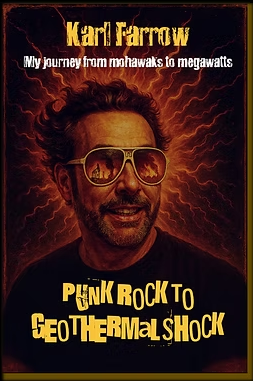
Your book, Punk Rock to Geothermal Shock, highlights an unconventional journey. What can readers expect from the stories and lessons inside it?
Punk Rock to Geothermal Shock is ultimately a geothermal sales pitch through a story of resilience, reinvention, and challenging conventional thinking. It follows years of people telling me, “you should write a book.” It is my journey, but perhaps one that many others can relate to—struggling within traditional education, being a misfit, exploring business ventures and entrepreneurship in early-stage startups, building several international energy businesses, and eventually arriving at CeraPhi Energy. The title reflects the spirit of the book: disruptive, unconventional, and driven by questioning established systems.
Readers can expect honest stories about success, failure, risk, and survival. The book explores experiences across industries including market trading, music promotion, offshore engineering, international project management, and clean energy innovation. It also reflects on personal challenges such as dyslexia, business setbacks, and navigating different cultures and industries around the world.
At its core, however, the book is not just about business or energy; it is about mindset. It explores how adversity can become fuel for growth and how unconventional thinking often creates the greatest opportunities. I also wanted to highlight the importance of sustainability and humanity’s responsibility in shaping the future of energy.
Above all, I hope readers come away believing that failure is never final, limitations are often self-imposed, and meaningful change is possible when vision, resilience, and purpose come together. I have another book planned for release in October this year, which will focus more on the theme of the entrepreneurial startup mindset—watch this space…
CeraPhi
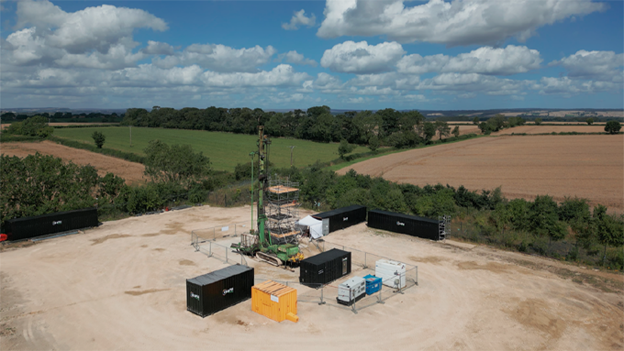
Founded in 2020, CeraPhi Energy is a leading project development company delivering global geothermal energy solutions at scale.
The company's patented CeraPhiWell™ system unlocks deep geothermal energy through both repurposed oil and gas wells and newly drilled wells, supported by their in-house drilling experts. This approach reduces project risk, shortens delivery times, and ensures cost-effective access to reliable, sustainable heat.
CeraPhi provide practical, future-ready solutions for the decarbonisation of heat across a wide range of sectors—including NHS facilities, universities, leisure centres, industrial estates, large housing developments and agriculture.
The company enables long-term, base-load heat delivery that supports district heating, low-carbon infrastructure planning, and sustainable estate management—helping organisations meet climate targets while maintaining operational resilience and fluctuating energy costs.
Contact Chris Pettit if you have a Q&A/company profile suggestion
e. chris@keyfactsenergy.com t. +44 (0) 7950 442868
KeyFacts Renewable Energy Directory: CeraPhi l KeyFacts Energy: Q&A
