 KEYFACT Energy
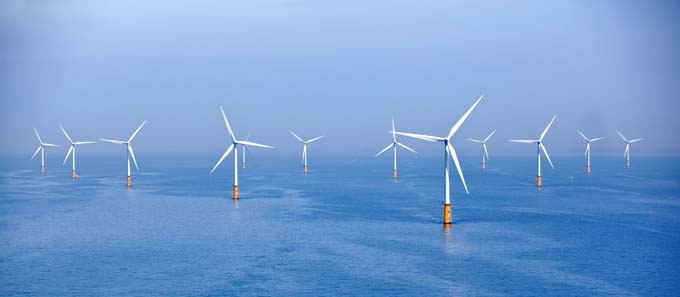
Offshore wind production in Europe is expanding faster than grid capacity with future annual curtailment levels potentially reaching a point where they cause a waste of both energy and public money, according to a new industry report.
Published by global energy consultancy Xodus and in partnership with Subsea 7, Offshore Co-Location: Batteries and Beyond for Net Zero explores the future of offshore storage co-location and examines how integrating energy storage with offshore wind can enhance system flexibility, reduce curtailment, and unlock new commercial value.
Amid a backdrop of global energy instability, cross-sector findings indicates that without intervention annual curtailment could exceed 300 terawatt-hour (TWh) by 2040 across the UK, Germany, Denmark, and the Netherlands. In 2024, 72 TWh of wind power was curtailed, with that number expected to increase two to threefold by 2030.
The detailed analysis points towards a proposed roadmap of three key phases up to 2040 focused on three critical areas that can halt the current trend: technological actions; commercial considerations and viability; and policy actions. Key to its implementation and potential success is the importance of collaboration and buy-in from policymakers and industry stakeholders.

Olivier Mette, global advisory director, Xodus, said:
“It’s becoming increasingly clear that as more wind turbines are being installed in the North Sea and elsewhere in Europe, the challenge has shifted. The difficulty no longer lies in generating clean electricity, but in ensuring that the power can be stored and transported effectively.
“If this is achieved then the wind power generated can be used when it is needed and greater energy security is realised. This should be a fundamental ambition during what is an unstable global geopolitical and energy environment.
“With decisive decision-making, we believe that this Roadmap to 2040 outlines both a necessary and achievable pathway to help propel European offshore storage forward.”
The report finds that co-located offshore storage offers the most immediate, scalable solution to deploy at speed, ease bottlenecks and ultimately reduce curtailment and transmission charges.
It emphasises that co-location is not an alternative to grid reinforcement but a complementary measure that can work alongside ongoing and future grid upgrades, helping to manage constraints while larger infrastructure improvements are delivered. This is done through the short-term adoption of offshore-adapted lithium-ion (Li-ion) batteries, acting as ‘workhorses’, before long-duration energy storage becomes the backbone of dispatchable offshore wind.
It also dials in on the importance of certain conditions aligning to ensure that wind and storage projects transition from a knife-edge proposition to a commercially compelling asset class. This hinges on a new metric, levelized cost of energy plus storage (LCo(E+S)), that captures the combined cost of energy and storage and informs system-level planning and valuation.
Policy reform is seen as the third key and decisive enabler to unlocking the full potential of offshore wind storage. The report calls for an evolution of the UK’s Contracts for Difference (CfD) model, which currently creates a structural disincentive to use storage by compensating curtailed energy.
Olivier Lodeho, technology director, Subsea7, added:
“In a time of uncertainty and growing demand for energy security, offshore energy storage represents a pivotal step in the evolution of the offshore wind sector. The challenge now is how we maximise the value of energy at a system level and, through integrating storage with offshore infrastructure, create new commercial opportunities.
“This report sets out a clear framework of priorities and milestones to help realise this potential - requiring decisive action, strong policy alignment and close collaboration across the industry to deliver a resilient, future-ready offshore energy system.”
Xodus’ analysis notes that 2024 curtailment levels have already cost the sector €8.9bn in congestion management. This number is only expected to rise as curtailment increases.
It also explores the capital expenditure (CAPEX) of energy storage, finding that co-located offshore storage represents a favourable long-term cost trajectory in addition to a transformative opportunity to enhance the value and reliability of offshore wind.
Both Li-ion batteries and compressed air-based hydro-pneumatic systems are expected to benefit from substantial long-term cost reductions as deployment scales and supply chains mature. By 2040, CAPEX for each is expected to decline by as much as 35-40%.
The full report can be accessed here l KeyFacts Energy Industry Directory: Xodus Group