 KEYFACT Energy
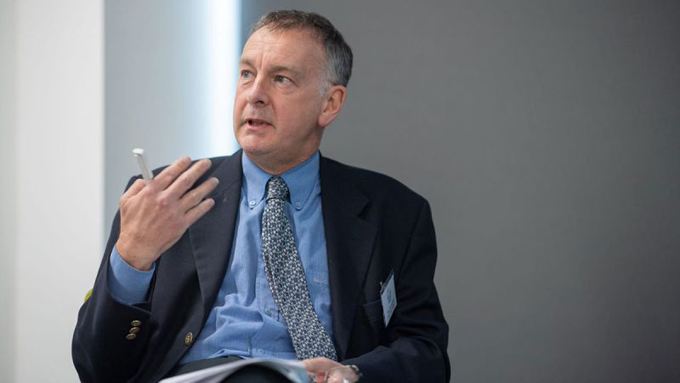
Professor John Underhill
The outbreak of hostilities in the Middle East appears to have prompted the UK Government to take a more pragmatic position on the North Sea.
Reports that the Secretary of State for Energy is considering approving the Jackdaw gas field show that there is a big difference between being minded to make a decision and actually being in a position to take one.
Given that the Offshore Petroleum Regulator for Environment and Decommissioning (OPRED) only wrote to the field operator, Adura, a couple of weeks ago to request more data on the project – something that will take time to compile and submit – a decision authorising gas production should not be expected before the early summer and certainly after the Holyrood election.
Clearly the mood music has changed though, and the UK Government’s latest positioning reflects more pragmatism following the outbreak of hostilities in the Middle East. The kite-flying signposts a more favourable direction of travel at least for gas developments like Jackdaw, if not yet for predominantly oil projects like Rosebank, on which the Secretary of State remains more circumspect.
UK no longer self-sufficient in gas
The reality is that the UK still relies upon oil and gas for three quarters of our total energy consumption needs. Gas (and nuclear) also provide essential baseload for the electricity we use. In numbers, gas provided around 30 per cent of our annual demand last year, and we rely upon it for over 50 per cent of our needs on cold, dark, windless winter days.
Since the UK is no longer self-sufficient in gas (that milestone having passed in 2004) and has very limited gas storage, the country is now reliant on imports for over half of the gas used for heating and cooking, keeping our boilers lit, hobs on and providing the aforementioned electrical baseload in our 21 million homes.
While much of the imported gas is piped from Norway and this comes with a lower carbon footprint than UK sources, an increasing proportion is from liquefied natural gas (LNG) sourced from countries like Qatar, Trinidad, Peru, Angola, Algeria and fracked gas in the USA, the emissions from which are far higher than from domestic supplies.
The UK has shown climate leadership in cutting greenhouse gas emissions by over half since 1990, primarily by weaning ourselves off of coal, with industry and electricity generation being replaced by buildings and transport as the largest source of emissions. The UK now only accounts for under 1 per cent of the global emissions total.
Because of the way that the emissions scorecard is calculated by country, a situation has arisen where decarbonisation through deindustrialisation reduces the UK’s carbon footprint, only for us to import the products society uses that come with an even higher one. In other words, the UK can look as though it is doing the right thing for the global climate when in fact it’s exacerbating it by offshoring our emissions.
Imperative to reduce fossil fuel dependence
None of the above takes away from the fact that the North Sea is a mature basin and field sizes, production and reserves have diminished. Nor does it negate the need to reduce dependency on fossil fuels. There is an imperative to do so, but in a managed and orderly way as opposed to a cliff-edge leading to job losses, fuel poverty and injustice.
We do need to accelerate the energy transition to build a robust, reliable, and secure low-carbon energy system that repurposes the UK’s Continental Shelf to meet the needs of the country as we move towards greater electrification. To get the transition right though, domestic oil and gas production will remain a key part of the transformation for years to come.
What Jackdaw illustrates is that gas discoveries already exist and there remains considerable potential for tiebacks to existing infrastructure, thus extending the life of the basin and safeguarding jobs. Doing so would also defer decommissioning, the costs of which the Treasury is currently on the hook for.
Several additional gas discoveries are currently uncommercial and undeveloped due to the energy profits levy (EPL). This windfall tax was first introduced in 2022 when the war in Ukraine forced up global prices. That it was not removed when windfall conditions passed has led companies to consider UK oil and gas uninvestable.
Although it was anticipated that the EPL was going to be replaced by the oil and gas price mechanism, which importantly still bakes in a windfall tax when prices go above $90/barrel and 90p/therm, events in the Arabian Gulf have delayed its implementation for now. If the mechanism were introduced, confidence to invest in the North Sea and West Shetlands would rise, reigniting domestic gas production.
Jackdaw could come on stream this year
As regards Jackdaw itself, the connecting pipeline to the neighbouring Shearwater hub is in place, the platform was moved from its dry dock in Norway last summer and is already on location in the North Sea. In total, over £1 billion has been spent to ready it for production.
For now, speculative press reports change nothing, and while gas cannot yet be produced from Jackdaw, OPRED has authorised preparatory work at the site, so everything can be ready for when government approvals are received.
If Jackdaw were given the green light, it could still be on stream this year with all of its gas entering the UK network thereafter. Production is expected to last seven to 12 years, contributing around 6 per cent of UK gas production and avoiding imports of the equivalent amounts. If the oil and gas price mechanism were brought in, other UK discoveries would come on stream too.
The prize for the UK is greater energy security, reliable supplies, lower global emissions, jobs supported, tax revenues enhanced for public benefit or to reduce fuel duty and bills, and a lower global carbon footprint too.
Professor John Underhill, university director for energy transition, Aberdeen University