 KEYFACT Energy
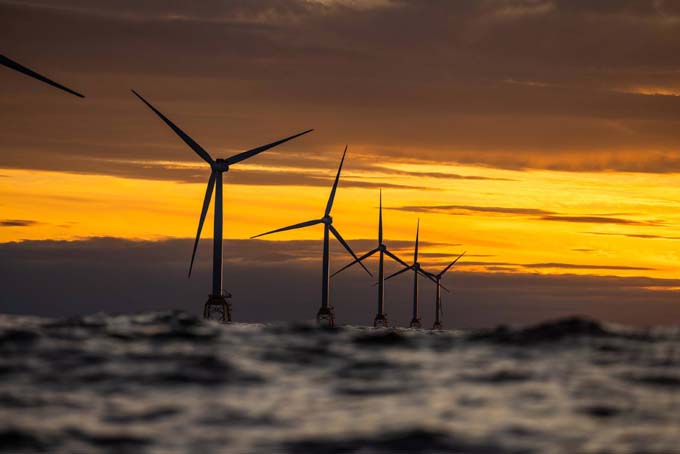
When a global powerhouse set its sights on Scotland, its investment was essential to help drive the nation's inter-array cable installation industry.
A £54 million investment pays off
Inter‑array cable manufacturing and installation are vital to Scotland's offshore wind sector. These cables play a vital role in connecting wind turbines together within offshore wind installations, distributing electricity to substations.
For US giant Oceaneering, cable installation was a key commercial objective when it acquired Ecosse Subsea in Aberdeen for £54 million in 2018.
Since 2018, the acquisition has proved that Scotland offshore renewables sector is well worth investing in. Seabed preparation and trenching technologies depend on the careful laying and protection of inter‑array cables. Oceaneering's huge global scale, with revenues of £2.09 billion, is a testament to its belief in Scotland's thriving energy transition sector.
With deep expertise in dynamic inter‑array cable design, manufacture and laying, Oceaneering supports global wind projects, operating in some of the most demanding marine environments. Cable reliability determines project performance and risk.
Headquartered in Houston, the multinational brings world‑leading trenching, route clearance and cable‑laying technologies into its global renewables portfolio. This signalled strong confidence in Scotland’s subsea engineering industry.
Aberdeen's existing and well-connected energy cluster are a proven platform for Oceaneering's global presence. Its investment in Scotland underlines the firm's long-term commitment to the country as a strategic hub for net zero, offshore wind, and subsea technology.
Shaun Roedel, Senior Vice President of Manufactured Products, Oceaneering:
"By leveraging our strategic location for the UK offshore floating wind market, we can develop and strengthen our local supply chain and reduce logistical complexities. This will enhance efficiency and directly support our commitments to sustainable and responsible operations."
Believing in Scotland's energy transition infrastructure
Operating in more than 24 countries, Oceaneering is leveraging Scotland’s skilled workforce, advanced infrastructure, and innovation in energy transition.
The nation offers a vast 45 gigawatts project pipeline in offshore renewables, with a huge demand for major components including cable production, and anchors and mooring systems.
Oceaneering's Rosyth facility, originally operating since 1999, specialises in manufacturing umbilical cables for oil and gas, research and development (R&D) and testing functions. This drives innovation in subsea product development.
Oceaneering’s facility in Dyce focuses on subsea services, including a large Remotely Operated Vehicle (ROV) fleet, and asset integrity. In 2020, it consolidated operations into a new 4,748 metres square office and 8,175 metres square workshop, supporting its growth across Europe, Africa, and the Middle East.
The company supports inter‑array cable systems by providing the subsea robotics, survey, installation support and inspection capability. This is required to install, verify and protect cables within offshore wind farms.
In March 2026, Oceaneering announced a new Momentum Electric ROV, which is designed for 30-day continuous subsea operations. The vehicle is designed to deliver extended support for drilling, inspection, maintenance and repair (IMR), surveys, and construction work using 360° vision.
Investing in a bright net zero future
This long-term investment journey reached a new milestone in August 2025 when Gillian Martin, Scottish Cabinet Secretary for Climate Action and Energy, visited the firm’s Rosyth facility to announce a £402,594 R&D grant from Scottish Enterprise.
The grant is part of a wider £1.6 million project that will help the company expand its capacity for subsea power cables in Scotland’s floating offshore wind sector. A chance meeting in 2010 between Scottish Enterprise Global Account Manager, Andrew Gosden, and Oceaneering’s then General Manager at an energy skills course, sparked a relationship that has grown ever since.
Approved in early 2024, the grant will support an 18-month project to design, build, and test a prototype dynamic array cable for floating offshore wind farms. These cables connect floating turbines and withstand constant movement at sea, making them critical for reliable power transmission.
The project will initially use existing manufacturing equipment for R&D, with plans for further capital investment in new machinery and capacity once the product is designed and certified. Scotland provides an ideal environment for such innovation. It's a global leader in offshore wind, ranking among the top ten markets worldwide, with a project pipeline exceeding 45 GW. The country aims to be net zero by 2045.
Combined with advanced port infrastructure, world-class research institutions, and a highly skilled workforce, Scotland is a prime location for companies like Oceaneering to diversify and grow.