 KEYFACT Energy
Eunice Newton Foote was an American scientist, inventor, and women's rights campaigner. She was the first scientist to identify the insulating effect of certain gases, and that therefore rising carbon dioxide levels could increase atmospheric temperature and affect climate, a phenomenon now referred to as the greenhouse effect.
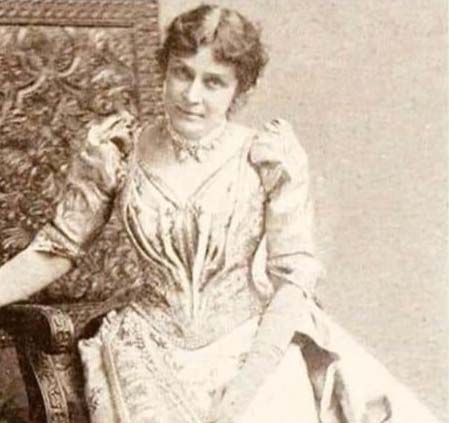
The life and work of Eunice Newton Foote reveal a remarkable story of scientific curiosity, quiet innovation, and long-overdue recognition. Born on July 17, 1819, in Goshen, Foote grew up during a period when women were rarely encouraged to pursue scientific interests. Despite these societal limitations, she developed a strong intellectual foundation and a deep interest in the natural world. Her education, which included time at institutions that supported women’s learning, helped shape her analytical thinking and willingness to experiment—traits that would later define her scientific contribution.
Foote lived in an era when science was rapidly evolving, yet access to formal scientific institutions and platforms was largely restricted to men. Within this context, her achievements are particularly striking. In 1856, she conducted a series of experiments that would eventually place her among the earliest contributors to climate science. Using simple but carefully arranged equipment—glass cylinders, thermometers, and an air pump—she tested how different gases responded to sunlight. Her work led her to a groundbreaking conclusion: air containing higher concentrations of carbon dioxide became significantly warmer and retained heat more effectively than ordinary air.
This discovery was, in essence, an early demonstration of the Greenhouse Effect, the process by which certain gases trap heat in Earth’s atmosphere and contribute to global temperature regulation. Foote even suggested that changes in atmospheric composition, particularly increases in carbon dioxide, could influence the planet’s climate over time. At a moment in history when the mechanisms of climate were barely understood, her insight was both original and far-reaching.
Foote presented her findings at a meeting of the American Association for the Advancement of Science in 1856. However, the norms of the time prevented her from presenting her own research. Instead, her paper was read aloud by Joseph Henry, a prominent scientist who acknowledged the importance of her work but still operated within a system that excluded women from full participation. This moment reflects both the significance of her discovery and the limitations imposed on her recognition.
Only a few years later, John Tyndall conducted similar experiments with more advanced apparatus and received widespread credit for identifying the heat-trapping properties of gases. For many decades, Foote’s earlier contribution remained largely forgotten, overshadowed by Tyndall’s work and the broader historical tendency to overlook women’s achievements in science. It was not until the 21st century that historians rediscovered her 1856 paper and began to restore her place in the scientific narrative.
Beyond her scientific endeavors, Foote was deeply engaged in the social issues of her time. She was an active participant in the early women’s rights movement and attended the Seneca Falls Convention, a landmark gathering that marked the beginning of organized advocacy for gender equality in the United States. There, she signed the Declaration of Sentiments, aligning herself with the call for expanded rights and opportunities for women. Her involvement in this movement demonstrates that her intellectual pursuits were closely connected to a broader vision of social progress.
Foote’s personal life also reflected a collaborative and intellectually stimulating environment. She was married to Elisha Foote, an inventor and legal professional who shared her interest in innovation. Together, they navigated a world in which curiosity and experimentation were often constrained by social expectations, yet they continued to explore ideas and contribute to their respective fields.
In recent years, Eunice Newton Foote has gained recognition as a pioneering figure whose work anticipated one of the most pressing scientific issues of the modern era. Climate science, now a global field of study, rests in part on principles she helped to identify with modest tools and careful observation. Her story underscores how scientific progress is not always linear or fairly credited, and how important contributions can remain hidden for generations before being acknowledged.
Today, Foote is increasingly celebrated not only for her role in demonstrating the greenhouse effect but also as a symbol of perseverance in the face of exclusion. Her rediscovery has prompted a broader reassessment of the history of science, encouraging scholars and the public alike to recognize the diverse voices that have shaped our understanding of the natural world. In bringing her work back into the spotlight, modern researchers have not only corrected a historical oversight but also enriched the narrative of scientific discovery.
Eunice Newton Foote’s legacy is therefore twofold. She stands as an early architect of climate science, offering insight into atmospheric processes that remain central to contemporary research. At the same time, she represents the many individuals whose contributions were marginalized due to the social structures of their time. Her life invites reflection on both the progress of science and the importance of ensuring that recognition is as inclusive and accurate as possible.
KeyFacts Energy: Energy History