 KEYFACT Energy
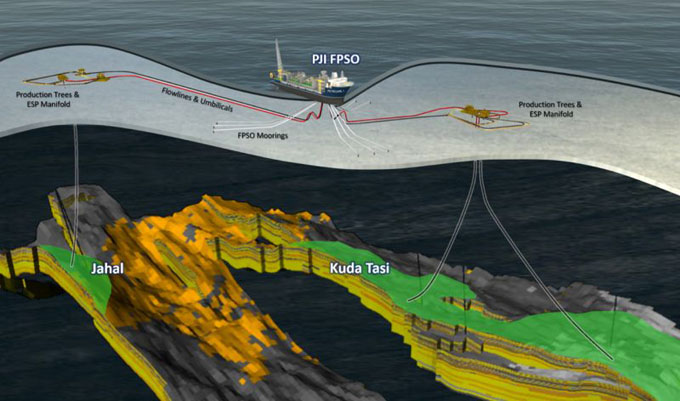
Finder Energy today provides an update on engineering studies assessing the repurposing of the Petrojarl I Floating Production, Storage and Offloading vessel (PJI) for the Kuda Tasi and Jahal oil fields (KTJ Project).
Highlights
- Phase 1 engineering confirms technical feasibility of redeploying the PJI to the KTJ Project
- Studies demonstrate no significant constraints to achieving targeted production rates across multiple operating scenarios
- Limited modifications required with optimisation and targeted upgrades identified for Phase 2
- Produced water treatment system identified as primary upgrade requirement with new facilities to be incorporated as part of the modification program
- Mooring system concept design supporting subsea infrastructure layout with optimisation to follow
- Independent fatigue assessment confirms no material reduction to vessel fatigue life under Timor-Leste conditions
- Electrical generation capacity sufficient with peak loads within available capacity
- Environmental and permitting pathway defined, supporting FID targeted for mid-2026
Damon Neaves, CEO, said:
“Completion of Phase 1 engineering marks an important milestone for the KTJ Project and confirms that the PJI is a technically robust and fit-for-purpose solution. The work has identified clear and manageable optimisation opportunities that will be progressed in Phase 2.
The findings validate Finder’s strategic acquisition of the PJI, securing critical infrastructure early to accelerate development and support delivery of first oil.”
Phase 1 engineering studies were undertaken by Amplus Energy and specialist contractors covering topsides/process engineering, mooring design and structural integrity.
The studies assessed the suitability of the PJI to process hydrocarbons from the KTJ fields under a range of forecast production scenarios, including peak liquids and high water cut cases.
Four representative operating cases were modelled, confirming the vessel can support production rates of approximately 25,000 bopd, with increasing water handling over field life.
Key Findings
1. Topsides & Process Systems
Core separation and processing systems are largely fit-for-purpose, with manageable constraints
Produced water treatment system identified as the key capacity limitation
Debottlenecking and optimisation (including reduced heating requirements) expected to improve system performance and reduce loads
Several equipment upgrades and control valve modifications identified
2. Materials & Integrity
Vessel materials are suitable for redeployment, subject to corrosion management strategies
CO₂-related corrosion identified as a risk, to be managed through chemical injection and monitoring systems
3. Mooring System
Conceptual mooring design supports required subsea infrastructure corridors
Detailed design to be optimised for cost and design load criteria
Vessel heading control and thruster capacity to be further assessed
4. Fatigue & Structural Integrity
Independent assessment confirms minimal impact on vessel fatigue life under Timor Sea operating conditions
Only routine repairs and inspections required prior to redeployment
5. Electrical & Utilities
Power generation capacity is sufficient across all operating cases
Peak demand remains within available capacity, with no major upgrades required
6. Environmental & Approvals
Environmental approvals pathway defined, including full Environmental Impact Assessment (EIA)
EIA and permitting activities to be progressed in parallel with project schedule to FID
Pathway to Phase 2 and FID
Phase 2 engineering will focus on:
- Process optimisation and finalisation of operating parameters
- Detailed design of new produced water treatment facilities
- Mooring system optimisation and integration with subsea systems
- Finalisation of equipment specifications and vendor engagement
- Development of cost estimates and project schedule
Timor-Leste – North West Shelf
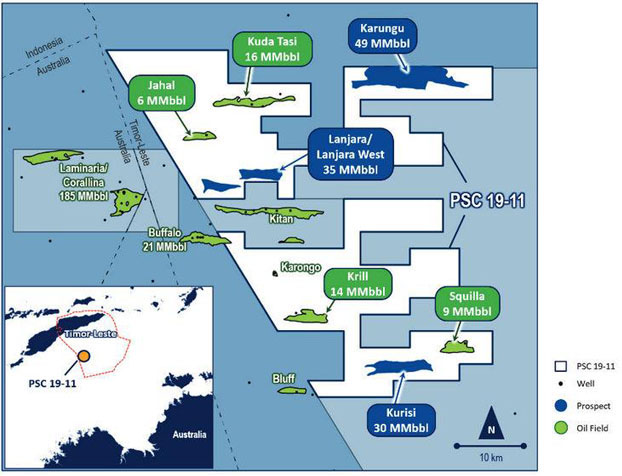
Finder Energy holds 66% and Operatorship of PSC 19-11, located within the prolific Laminaria High oil province of Timor-Leste.
Near Term Development
- Discovered and fully appraised Kuda Tasi and Jahal Oil Fields with combined 25 MMbbl Gross 2C Contingent Resources
- Multiple development concepts including proven FPSO tied to subsea wells
- Excellent initial production rates of 25,000 – 40,000 bopd (facility dependant)
- Rapid development pathway
- Initial development provides hub for additional near field development, creating a pipeline of opportunity
Low Risk Upside
- Discovered Krill & Squilla Oil Fields with combined 23 MMbbl Gross 2C Contingent Resources
- Drill-ready, low-risk and near-field exploration prospects with combined 116 MMbbl Gross Mean Prospective Resources
KeyFacts Energy: Finder Energy Timor-Leste country profile
