 KEYFACT Energy
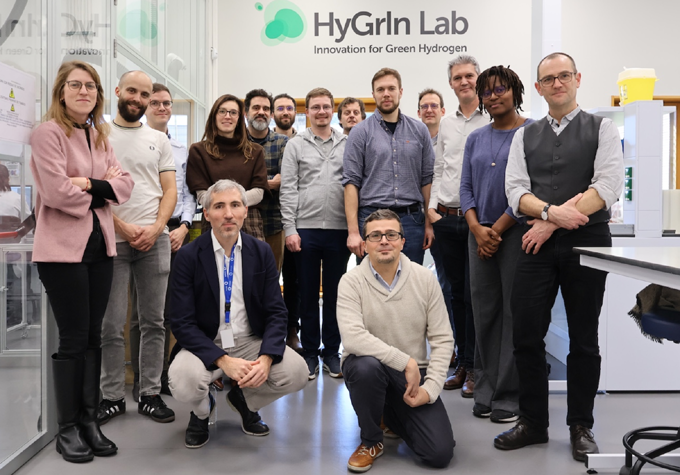
The DESIREE team, during the kick-off meeting in January 2026
A new European research initiative is developing high-efficiency electrolysis technologies to produce renewable hydrogen from water in a more sustainable, cost-effective and efficient way, using advanced and responsible approaches to reduce CO₂ emissions.
Despite its potential, hydrogen remains largely carbon-intensive. According to the International Energy Agency (IEA)’s Global Hydrogen Review 2023, global hydrogen production exceeds 95 million tonnes per year, yet only around one per cent is produced from low-emission pathways. Most hydrogen is still generated through fossil-based processes, resulting in substantial greenhouse gas emissions and limiting its contribution to climate neutrality.
The DESIREE project (Development of Enhanced SOEL Components for Improved Reliability and Endurance) aims to overcome these barriers by advancing Solid Oxide Electrolyser (SOEL) technology. Operating at high temperatures, SOEL systems enable highly efficient water electrolysis and offer strong potential for integration with renewable electricity and industrial heat sources. The project is coordinated by CENER and involves a European consortium made up of 10 partners and 2 affiliate entities.
Running from January 2026 to June 2029, DESIREE will design, build and validate a 40-kilowatt multi-stack prototype system, building on state-of-the-art stack technologies and focusing on their optimisation, integration and operational performance at system level. The project addresses durability, efficiency and circularity challenges by optimising materials, sealing solutions and overall system architecture within existing stack technologies.
The prototype will combine high-temperature electrolysis with thermochemical hydrogen compression, enabling the direct supply of pressurised hydrogen without additional electrical compression. The system is expected to achieve efficiencies above 85 per cent, representing a gain of more than 15 per cent compared with current electrolysis technologies and a key step towards lowering the levelised cost of hydrogen.
Setting a new state of the art
Although SOEL technology is already recognised for its high efficiency, widespread deployment is limited by long-term degradation mechanisms, material constraints and challenges related to dynamic operation under variable renewable energy input. DESIREE addresses these limitations through a holistic, system-level approach.
At cell and stack level, the project will develop advanced electrodes enhanced with nanoscale materials to improve electrochemical performance and reduce operating temperatures. New glass-ceramic sealing systems with improved thermal and chemical stability will extend stack lifetime under demanding operating conditions. In parallel, DESIREE will establish recycling routes for critical raw materials such as nickel, cobalt, lanthanum and strontium, reintegrating recovered materials into new components. These material developments are complemented by efforts to enhance long-term stability, enable lower operating temperatures and ensure compatibility with system-level integration.
At system level, DESIREE will introduce a modular and compartmentalised architecture that enhances operational flexibility, simplifies maintenance and improves thermal management. Waste heat recovery, supported by advanced heat exchanger design, will be used to drive hydrogen compression, while advanced control strategies and power electronics will enable
stable operation in renewable-energy-based grids.
KeyFacts Energy: Hydrogen news