 KEYFACT Energy
Cenovus Energy today announced its fourth-quarter and full-year 2025 financial and operating results. In the quarter, the company generated approximately $2.4 billion in cash from operating activities, $2.7 billion of adjusted funds flow and $1.3 billion of free funds flow. Operating results in the quarter included record Upstream production of 917,900 barrels of oil equivalent per day (BOE/d) and Downstream crude throughput of 465,500 barrels per day (bbls/d), representing an overall utilization rate of 98%.
Highlights
- Upstream production of 917,900 BOE/d in the fourth quarter, an increase of 5%(1) from the prior year excluding the impact of production associated with the acquisition of MEG Energy Corp. (MEG). Production ended the year at a monthly record rate of over 970,000 BOE/d in December.
- Achieved record quarterly Oil Sands production of 726,600 BOE/d including record rates at Foster Creek and Sunrise.
- Sustained strong Downstream performance, with fourth-quarter crude throughput of 465,500 bbls/d, representing utilization of 98% and U.S. Refining adjusted market capture of 106%.
- Completed the Foster Creek optimization project, delivering incremental production of approximately 30,000 bbls/d ahead of schedule.
- Completed the acquisition of MEG in the fourth quarter, and materially progressed integration and initial synergy capture initiatives. Cenovus continues to expect to deliver $150 million of annual synergies in 2026 and 2027, growing to over $400 million annually in 2028 and beyond.
- Returned $1.1 billion to shareholders in the fourth quarter, including $714 million through common share purchases and $380 million through common and preferred share dividends.
"Our talented people and industry‑leading assets delivered an exceptional year for Cenovus in 2025, marked by record Upstream production, strong Downstream performance and the value-enhancing, strategic acquisition of MEG,” said Jon McKenzie, Cenovus President & Chief Executive Officer. “Through disciplined growth and operational execution, we are well positioned to continue delivering sustainable value for our shareholders while advancing our long‑term strategy.”
(1) Percentage change when comparing the fourth quarter of 2024 to the fourth quarter of 2025, excluding incremental production as a result of the MEG acquisition.
Fourth-quarter results
Operating
Cenovus’s total revenues were $10.9 billion in the fourth quarter, down from $13.2 billion in the third quarter of 2025. Upstream revenues were $7.6 billion, an increase from $6.7 billion in the previous quarter, while Downstream revenues were $5.3 billion, a decrease from $8.4 billion in the third quarter.
Total operating margin was $2.8 billion, compared with $3.0 billion in the previous quarter. Upstream operating margin was $2.6 billion, in line with the third quarter as a result of higher production and lower per-unit operating costs, partially offset by a decrease in benchmark oil prices. Downstream operating margin was $149 million, a decrease from $364 million in the previous quarter, primarily due to lower market crack spreads. Operating margin in the U.S. Refining segment was $81 million, which included a $67 million benefit from the receipt of proceeds related to a pipeline settlement, a $134 million inventory holding loss and $14 million of turnaround expenses.
Total Upstream production was 917,900 BOE/d in the fourth quarter, up from 832,900 BOE/d in the third quarter. Christina Lake production was 308,900 bbls/d compared with 251,700 bbls/d in the prior quarter, as a result of the acquisition of MEG, which closed on November 13, 2025. Foster Creek production was 220,100 bbls/d, up from 215,400 bbls/d in the third quarter, as volumes from the Foster Creek optimization project continued to ramp up ahead of schedule. Sunrise production was 60,300 bbls/d compared with 52,400 bbls/d in the third quarter, following the completion of planned maintenance in the prior quarter.
Production from the Lloydminster thermal assets was 106,900 bbls/d compared with 95,700 bbls/d in the prior quarter, partly as a result of strong performance from a successful redevelopment well program in the area. In the fourth quarter, the Rush Lake facilities in west-central Saskatchewan successfully restarted production and a phased ramp-up is progressing as expected. Lloydminster conventional heavy oil output was 28,100 bbls/d, compared with 25,400 bbls/d in the third quarter.
Production in the Conventional segment was 120,400 BOE/d, a decrease from 126,900 BOE/d in the previous quarter as a result of unplanned maintenance and December weather-related shut-ins.
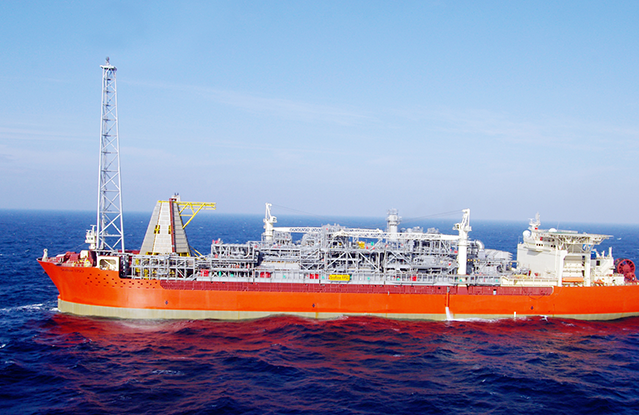
In the Offshore segment, production was 70,900 BOE/d compared with 63,200 BOE/d in the third quarter. In Asia Pacific, production volumes were 54,000 BOE/d, higher than 51,900 BOE/d in the previous quarter, following the conclusion of maintenance activity in China. In the Atlantic region, production was 16,900 bbls/d, up from 11,300 bbls/d in the prior quarter. Subsequent to the quarter, gas sales agreements relating to the Liuhua 29-1 and Liuhua 34-2 fields were extended to enable gas sales through the end of the production periods of each field.
Total Downstream crude throughput in the fourth quarter was 465,500 bbls/d. Crude throughput in Canadian Refining was 112,900 bbls/d, representing a utilization rate of 105%, compared with 105,400 bbls/d in the previous quarter.
In U.S. Refining, crude throughput was 352,600 bbls/d, compared with 605,300 bbls/d in the third quarter as a result of the disposition of Cenovus’s interest in WRB Refining LP (WRB) which closed on September 30, 2025. Fourth-quarter crude throughput represents a utilization rate of 97%. U.S. Refining revenues were $4.2 billion, down from $7.1 billion in the prior quarter. Adjusted market capture in U.S. Refining was 106%, compared with 65% in the third quarter, driven by strong asset reliability, seasonal product pricing mix impacts and a pipeline settlement received in the quarter. Excluding the impact of the pipeline settlement, adjusted market capture in the fourth quarter would have been approximately 11% lower.
Financial
Cash from operating activities in the fourth quarter increased to approximately $2.4 billion from $2.1 billion in the third quarter. Adjusted funds flow was $2.7 billion, in line with the prior quarter, and excess free funds flow (EFFF) was a shortfall of $1.6 billion, compared with EFFF of $745 million in the prior quarter as a result of the MEG acquisition. Net earnings in the fourth quarter decreased to $934 million from $1.3 billion in the previous quarter. Fourth-quarter financial results were driven by higher Upstream production and sales, and strong execution in the Downstream, offset by lower benchmark oil prices and market crack spreads.
Long-term debt, including the current portion, was $11.0 billion as at December 31, 2025. Net debt was $8.3 billion as at December 31, 2025, an increase from the previous quarter, as a result of the closing of the MEG acquisition, partially offset by proceeds received from the sale of WRB. The company continues to steward toward a long-term net debt target of $4.0 billion.
Growth projects
In the Oil Sands segment, the Foster Creek optimization project was successfully completed ahead of schedule, which has delivered incremental production of approximately 30,000 bbls/d. At Christina Lake, since achieving first oil at Narrows Lake mid-year 2025, production ramp up has been progressing to plan. The Christina Lake North expansion project is on track to deliver increased steam capacity and production volumes of approximately 40,000 bbls/d by 2028. At Sunrise, the first of the new well pads on the east development area is currently steaming, with three new well pads from this area expected to come online in 2026.
At West White Rose, commissioning of the platform has continued to make significant progress despite challenging offshore weather conditions, with construction and welding complete and systems integration testing underway. First oil is anticipated in the second quarter.
Full-year results
In 2025, Cenovus’s total Upstream production averaged 834,200 BOE/d, compared with 797,200 BOE/d in 2024, including record annual volumes from the Oil Sands assets. Oil Sands production was 644,100 BOE/d, including 254,300 bbls/d at Christina Lake and new annual production records of approximately 206,100 bbls/d at Foster Creek and 53,800 bbls/d at Sunrise. Full-year production from the Lloydminster thermal assets was 102,600 bbls/d, compared with 111,500 bbls/d in 2024, which reflects the temporary shut-in of production at Rush Lake, which began ramping up in the fourth quarter. Lloydminster conventional heavy oil production increased to 25,100 bbls/d from 17,600 bbls/d following a successful development drilling program. Conventional production was 122,800 BOE/d, up slightly compared with 2024. Offshore production was approximately 67,300 BOE/d, compared with 66,600 BOE/d in the prior year, driven by the successful restart of the White Rose field following the SeaRose asset life extension project executed in 2024.
Total Downstream throughput averaged 626,600 bbls/d in 2025, compared with 646,900 bbls/d in 2024, due to the disposition of Cenovus’s interest in the WRB joint venture at the end of the third quarter. Canadian Refining achieved record crude oil throughput of 110,700 bbls/d in 2025, running at or above full capacity due to ongoing improvement initiatives and high asset reliability. U.S. Refining crude oil throughput decreased to 515,900 bbls/d in 2025 compared with 556,400 bbls/d in 2024, reflecting the disposition of WRB, partially offset by ongoing operational improvements and increased reliability across the U.S. operated refineries.
Total revenues were $49.7 billion in 2025 and total operating margin was $10.6 billion compared with revenues of $54.3 billion and total operating margin of $10.8 billion in 2024. The year-over-year decrease in total revenues was largely due to lower benchmark oil prices. Operating margin was down slightly from the prior year due to lower benchmark oil prices, largely offset by higher Upstream production and sales, lower operating costs and strong execution in the Downstream.
Cash from operating activities was $8.2 billion for 2025 compared with $9.2 billion in 2024. Adjusted funds flow was $8.9 billion and free funds flow was $4.0 billion. Full-year net earnings for 2025 were $3.9 billion compared with $3.1 billion in 2024, primarily due to higher production and lower operating expenses, partially offset by a decrease in commodity prices.
Total capital investment for 2025 was $4.9 billion, primarily directed to sustaining production at the company’s Upstream assets, the construction of the major Upstream growth projects including West White Rose, and refining maintenance and reliability initiatives.
Reserves
Cenovus’s proved and probable reserves are evaluated each year by independent qualified reserves evaluators. As at December 31, 2025, Cenovus’s total proved and total proved plus probable reserves were approximately 6.1 billion BOE and 9.6 billion BOE, respectively, and total proved and total proved plus probable bitumen reserves were approximately 5.7 billion barrels and 8.9 billion barrels, respectively. At year-end 2025, Cenovus had a proved plus probable reserves life index of approximately 28 years.
KeyFacts Energy: Cenovus Canada country profile