 KEYFACT Energy
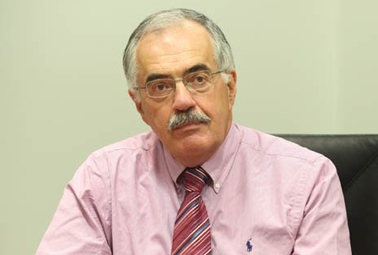
An experienced, passionate explorer and geophysicist, David Bamford has spent more than 40 years in the oil and gas industry, including 23 at BP and 18 in consulting.
Having completed a physics degree at the University of Bristol as well as a PhD in Geological Sciences at the University of Birmingham, David’s particular interests focus is skills development, sub-surface problem solving, digitisation and the carbon agenda.
Throughout his career he has occupied high-level roles including working as a Non-Executive Director for Tullow Oil, which had exploration success in Uganda, Kenya and Ghana, and Non-Executive Director for Premier Oil, taking the organisation into Brazil and Mexico.
These experiences, as well as time spent as Global Head of Exploration for BP and as BP’s Chief Geophysicist, have all given David an in-depth knowledge of the oil and gas industry, its challenges, opportunities and how to maximise them.
An ‘accidental’ Geophysicist
Can you tell us a bit about your background and what drew you to the energy sector?
In 1967 I was due to graduate with a B.Sc in Physics from Bristol University and in the Spring Term I began to think seriously about what I should do next. The Physics Department had opined that I wasn’t clever enough for a Ph.D in Theoretical Physics but could probably cope with one in Solid State or Cosmic Physics (collecting particles in high altitude balloons). All 3 topics struck me as boring!
But then the Careers Office announced that a gentleman from Shell would be available to meet interested students, especially physicists. And so it was that I met David Robson; firstly, he made petroleum geophysics seem exciting, international, flying in helicopters; and, secondly, gave me some advice, namely that as I was 2 to 3 years younger than their typical hires from the Netherlands, Germany, Switzerland, I should consider a Ph.D in Geophysics at Birmingham or Durham. Don Griffiths in Birmingham was very responsive and so…
In late September 1967, I pitched up in Birmingham to begin research in Explosion Seismology. After graduating with a Ph.D 3 years later, I spent 9 years wandering from one Research Fellowship to another - Birmingham, Karlsruhe, Birmingham, Edinburgh, Karlsruhe.
Looking back, these years taught me a couple of things:
- This was the era of the increasingly large, increasingly international, explosion seismology experiments in the UK, Germany, France, Scandinavia, Kenya…
- The power of teams was one lesson - our experiments increased in size to where we had up to 50 mobile stations in the field, crewed by pairs from Germany, Austria, France, Switzerland, the UK to name just a few, run by a multi-national HQ.
The impact of technology was the other lesson - we progressed from a few homemade analogue recording stations to the widespread adoption of the Lennartz MARS analogue system and the development in Karlsruhe of a computer-based analogue-to-digital converter that meant we could digitize large numbers of recordings more or less automatically and then plot seismographs easily in a consistent (‘record section’) format.
Great days!
But personally, I needed to move on and so on the 2nd January 1980 I stepped into the world David Robson had suggested and walked into reception in BP’s Britannic House North, a Portland Stone building in Moorgate, London. A petroleum geophysicist, no longer an ‘accidental’ one!
Exploration in BP and at Tullow Oil and Premier Oil
I spent 23 years at BP in a variety of roles; then 10 at Tullow Oil and 2 at Premier Oil, both as a Non-Executive Director.
To summarise the BP years, I spent 6 years in the Geophysical Research & Technical Services Department, then in 3 Chief Geophysicist roles - UKCS, North America, BP Group, moving in 1995 to run the West Africa Business Unit and then the Norway BU, returning to London for my final 3 years as Head of Global Exploration.
Reflecting on the key lessons from this whole 36 year period, and the 9 years since:
Again, the impact of Technology was crucial - AVO, 3D - especially Regional Exploration 3D, horizontal drilling, fracking, petroleum geoscience.
Teams again - especially small teams; their psychology, leadership, motivation, how they learn.
Exploration - see the new basins, win the race to access the best acreage, be clear what your Competitive Advantage is, understand the scale of opportunity needed to really impact the company’s bottom line, try to be number 1 and never, ever, be late to the party! I was well taught and here I’d like to name check some colleagues - David Jenkins, Pete Hill, Chris Wright, Ian Vann, Richard Hubbard, Ian Cloke - John Browne too; and others - in London, Aberdeen, Houston, Stavanger plus recently Neil Hodgson, Andy Pepper - who demonstrated the truth of Wallace E Pratt’s “Oil and Gas is first found in the minds of men and women!” (OK, that’s my 20th Century update!).
Others! - I have to say that my experience has been that the further up a company you go - senior executives, directors, chairs - the less understanding there is of Exploration, the more there are self-aggrandising individuals - as some of them are still active, I’d better say no more!
How do you see the balance between supply and demand evolving in the next 5–10 years, especially with geopolitical uncertainty and OPEC+ policies?
I think there are plenty of folk who can offer better opinions on OPEC/oil/the impact of fine balances between supply and demand on price than me.
However, Gas supply is something that especially interests me. Obviously, its geopolitics is defined by the vast amounts in the Middle East, West Siberia, and the US in particular.
And LNG has changed from a niche activity by Shell (for example) to being the means where a gas molecule can meet demand more or less anywhere.
There is so much new LNG planned that there are at least two contrasting scenarios - will there be a ‘glut’ which will drive down prices or will reasonably priced LNG open expanded markets, especially in SE Asia, driving out coal and oil for power generation? I believe in the latter…
What risks do you think are most underestimated in the global oil & gas markets right now?
Obviously CO2 emissions are a focus but I think governments and regulators are taking an increasing interest in methane emissions and the other side of the coin which is methane flaring. We have all manner of satellites whizzing around the planet, lots of ‘pretty pictures’ of emissions and flares, plentiful proposals as to appropriate regulations (abandoning them in the USA, inventing them in the EU!), negligible enforcement.
The risk to investors is that regulators get their act together and begin to distinguish between ‘clean’ and ‘polluted’ oil or gas; if regulators begin with a Carbon Tax and move on to exclusion, this will have a profound impact on the value of their investments.
How are international companies adapting their strategies to navigate volatility in pricing, logistics, and regulation?
Well, you can see both Shell and BP shifting their strategies back to oil & gas as a central theme with renewables sitting more at the margin. Personally, I don’t understand what made BP believe that their skill base made wind farms, solar estates appropriate for them.
Whereas Chevron and Exxon have stayed with oil and gas and have been rewarded for this in the equity market.
But what next? As in the past, I believe the choice can be characterised as being between organic or inorganic strategies.
Organic = a return to significant Exploration activity which despite notable successes in Guyana and perhaps Namibia has been underfunded since ~2014. But where? Are there more, as yet unexplored, Ultra Deep Water petroleum provinces lurking in the world’s oceans and/or is the amazing methodology that has been developed in the USA for exploiting unconventionals in shales going to be exported to some or all of the world’s great source rocks? I hope for both.
Inorganic = a return to the Mergers & Acquisitions activity seen in 1998-2001 and in sporadic outbursts since. There’s been quite a lot of such activity in the Permian Basin where Chevron for example have built a commanding position; the over excitement of a few years ago led to some ‘debt distressed’ players and I’d think there’s still some ‘mopping up’ to be done. More interesting I think is that Middle East NOCs are awash with cash and I’ll be watching their moves with at least curiosity.
Do you believe the U.K.’s energy policies provide enough clarity and stability for long-term investment decisions?
How long have I got??
But No, I do not believe this.
I think the rot truly began to set in during the last couple of Labour government years before 2010. However, the real policy OmniShambles dates from the period of Alliance government in 2010-2015 when domestic E&P began to be neglected and the fallacious assumption was made that the U.K. could always access LNG on the ‘spot’ market and could therefore get by without significant gas storage. This assumption worked until it didn’t!
And all sorts of Renewables - wind, solar, biogas - received, and continue to receive, consumer-funded subsidies.
And we now have a party that might form the next U.K. government who says it will annul certain contracts; maybe the mega solar estate in Lincolnshire that’s just been approved by DESNZ will be a hostage to fortune!
Energy of any sort exists as a business for the long term; bizarre policies, the ‘windfall’ tax, and shifts in government targets and regulations manifestly impact investor confidence in the UK energy industry; so I ask myself why I would invest in UK-based oil & gas as opposed to companies such as Shell, BP, Total with an international portfolio?
What are you doing nowadays?
I’m well known as a geophysically-oriented Explorer willing to offer anyone my opinions on the future of both Exploration and Geophysics, asked for or not!
I’ve been on the Advisory Board of Kimmeridge Energy in New York since 2010.
A small number of colleagues and I founded IMMER Ltd, whose initial focus is on using sensors carried by satellites and UAVs, and “walkers”, located in fixed ground stations, to monitor and measure methane emissions and flaring. Very much a startup!
My family and I are investors (Windward Exploration & Properties Ltd); we have a modest charitable arm investing in sport, especially cricket for juniors, boys and girls. I’m a member at Surrey County Cricket Club…
KeyFacts Energy: Q&A