 KEYFACT Energy
Statoil, the Norwegian State petroleum company, was formed in 1972 by a decision of the Norwegian parliament to be the government’s commercial instrument in the development of the oil and gas industry in Norway. Five decades later, the company has become a major supplier of energy to Europe, a world-leading offshore operator, the largest oil and gas operator in Norway, and an international pioneer in renewables and low-carbon solutions. In 2018, the company changed their name to Equinor.
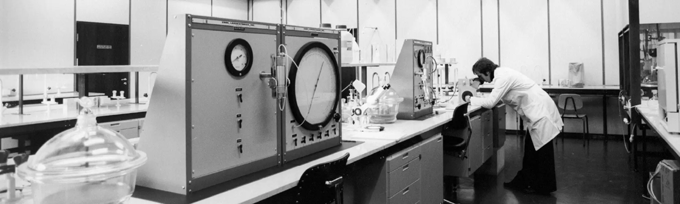
No oil in the North Sea
The first UN conference on the law of the sea opened in Geneva on 24 February 1958 with the aim of developing a legal regime for the world’s oceans. In connection with the conference, the Ministry of Foreign Affairs asked the Geological Survey of Norway (NGU) to assess the likelihood of finding mineral raw materials on or under the country’s continental shelf. The NGU’s response was clear-cut: “The chances of finding coal, oil or sulphur on the continental shelf off the Norwegian coast can be discounted”.
First seismic surveys
The first seismic investigations by Norwegian scientists were conducted on the continental shelf in 1962. Geophysicist Markvard Sellevoll and his staff at the Seismological Observatory in Bergen proved that Norway’s continental shelf from the Skagerrak to Spitsbergen consisted of sedimentary rocks which had the potential to contain both oil and gas.
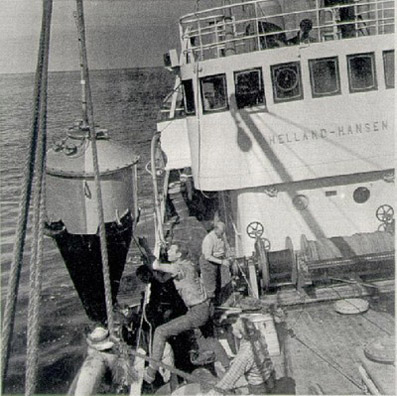
Seismic surveys work. Photo: Markvard Sellevoll
Sole Norwegian licence sought
Phillips Petroleum Co was the first oil company to contact the Norwegian government. It requested a sole licence to explore for oil and gas in those parts of the North Sea which fell under Norway’s jurisdiction. The US company turned to Norway because its competitors were already seeking exploration permits from other North Sea states. But the Norwegians had experience of foreigners seeking to exploit its natural resources, particularly hydropower. So there was no question of the government handing the whole continental shelf over to a single company. It had no idea at the time that oil might exist off the Norwegian coast.
Awards on the Norwegian continental shelf
On 9 April 1965, the Storting (parliament) adopted rules for petroleum exploration and production on the Norwegian continental shelf below the 62nd parallel (the northern limit of the North Sea). The Norwegian sector was divided into 36 quadrants, each subdivided into 12 blocks. One block covered about 500 square kilometres. A mere four days later, the first – and by far the largest – Norwegian offshore licensing round was announced. With 278 of 314 blocks on offer, nobody was to be in any doubt about the government’s willingness to make a commitment. At the deadline of 15 June, 11 applications had been received for 208 blocks. The Ministry of Industry awarded 78 production licences to eight groups of companies on 17 August. Phillips, which had shown early interest in the Norwegian North Sea, received acreage together with Fina and Agip in the Phillips group. Norsk Hydro participated in the Petronord group with seven French companies. Other players included some of the world’s biggest oil companies, such as Esso, Shell and Amoco.
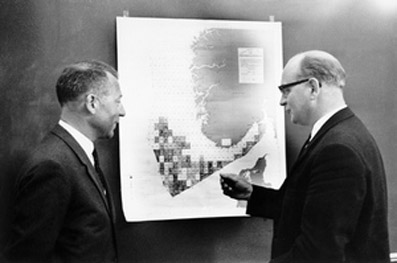
Senior civil servant Jens Evensen (left) and industry minister Karl Trasti present the first map of awards on the Norwegian continental shelf to a press conference. Photo: NTB / Scanpix
First well spudded
The first exploration well on the Norwegian continental shelf was spudded at 08.20 on 19 July 1966 by Esso from the Ocean Traveler drilling rig. This occurred in block 8/3 – covered by production licence 003 – 160 kilometres west of Stavanger. Nothing was found on this first attempt, but more wells followed. Norway’s oil age had thereby been initiated.
The Christmas gift
Ed Crump, head of Phillips in Norway, called the Ministry of Industry on 23 December 1969 with the following message: “I think we have an oil field here.” This report of the giant Ekofisk discovery has been called Norway’s “Christmas gift of 1969”. The first indications that 2/4 contained oil and gas had been received as early as late August. After nine days of drilling, the bit penetrated a gas pocket at a depth of 1 662 metres. Gas bubbled up along the drill string, while oil, gas and drilling mud poured on the drill floor. Drilling superintendent Ed Seabourne in Phillips could soon tell Crump: “I can cover the North Sea from here to the North Pole with oil.” This field was named Ekofisk, and initial estimates suggested that it contained three billion barrels of oil. Its discovery initiated a new epoch in Norwegian history.
Commercial
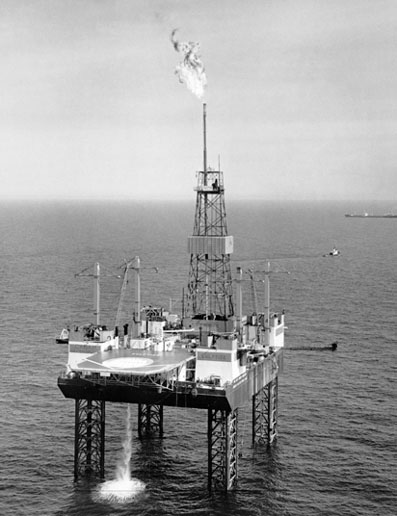
In 1971, Phillips Petroleum told the government that Ekofisk was to be developed. This introduced a new word – drivverdig, or commercial – to the Norwegian language. And, as with any project in the oil industry, getting going was a matter of urgency. As early as 9 June, Prime Minister Trygve Bratteli was invited to the Gulf Tide jack-up to perform the official inauguration of the first trial production from the Norwegian continental shelf.
The discovery of major oil reserves in the North Sea transformed Norway’s future. The Norwegian Parliament (Storting) voted to establish a state oil company. On 18 September 1972, Den norske stats oljeselskap AS (“The Norwegian State Oil Company”), later known simply as Statoil, was founded with its headquarters in Stavanger. The company was wholly owned by the Norwegian government, and its primary mission was to manage and develop Norway’s emerging offshore oil and gas resources.
Just two years after its founding, the Statfjord field was discovered in the North Sea, and production began in 1979 — a major achievement in establishing Norway as an oil exporter. In 1981, Statoil became the first Norwegian company to be granted the role of operator on a major offshore field, at Gullfaks, marking a milestone in operational autonomy and engineering leadership.
Growth on the Norwegian Continental Shelf
Statoil was to be an integrated enterprise with commercial freedom of action and a relatively broad objective. But it would also be subject to parliamentary control, and the ministry draw up regulations to ensure that. With Arve Johnsen as its first chief executive, Statoil rapidly built up its own expertise in all key functions such as exploration, production, transport, processing and marketing of oil and gas. Arve Johnsen Statoil’s first chief executive was Arve Johnsen, an economist, lawyer and Labour Party member. He became state secretary (junior minister) at the industry ministry in Trygve Bratteli’s first administration. As industry minister Finn Lied’s closest colleague, he became one of the principal architects of Statoil. Johnsen remained in charge of the state oil company from its creation in 1972 until he was forced to resign in the wake of cost overruns at Mongstad in 1988. From being the only employee at the Stavanger head office, he built Statoil up into Norway’s biggest company over 15 years.
Stavanger, the “oil capital”
“Stavanger’s the spot” was the city council’s slogan when the location of Statoil and the NPD came to be determined. Most of the oil companies had already established offices and base operations in Stavanger, and the whole political community in the surrounding county of Rogaland worked actively to persuade the Storting to place these new institutions there. Mayor Arne Rettedal was the driving force, together with rector Kjølv Egeland at Rogaland Regional College and Konrad B Knutsen, chief financial officer for the city council. The Storting’s decision on 14 June 1972 to locate both the Norwegian Petroleum Directorate and Statoil in Stavanger laid the basis for the city’s future growth as an oil centre.
Throughout the 1980s and 1990s, Statoil grew rapidly alongside the development of Norway’s petroleum industry. It played a central role in exploring and developing major offshore fields, including:
Statfjord
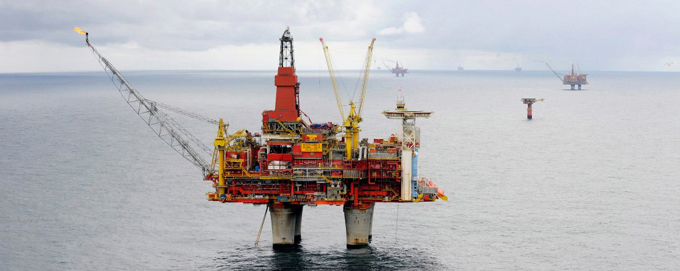
The Statfjord field is one of the most iconic and historically significant petroleum developments on the Norwegian Continental Shelf. Discovered in 1974 and brought on stream in 1979, Statfjord straddles the Norwegian–UK median line in the northern North Sea and was developed through close cross-border cooperation. The field is renowned for its use of large concrete gravity-based structures—Statfjord A, B, and C—which became symbols of Norway’s early offshore engineering capability. Reservoirs are mainly Jurassic sandstones with excellent quality, enabling high production rates in the early years. At its peak in the mid-1980s, Statfjord was among the world’s largest offshore oil producers and played a major role in establishing Norway as a leading petroleum nation. Over time, the field transitioned from a pure oil producer to a mature field with increasing gas production, extensive water injection, and advanced recovery techniques. Continuous redevelopment, infill drilling, and improved reservoir management significantly extended its productive life well beyond original expectations. Statfjord is often cited as a benchmark field for lifecycle management, technological learning, and value creation from mature assets.
Statfjord set an incredible record on 16 January 1987, when its three platforms produced no less than 850 204 barrels of oil in a single day. On that day, Statfjord accounted alone for almost as much oil as the whole Gulf of Mexico. The field delivered far more than half of Norway’s total oil output during its best years and 80 per cent of Statoil’s operating profit.
Gullfaks
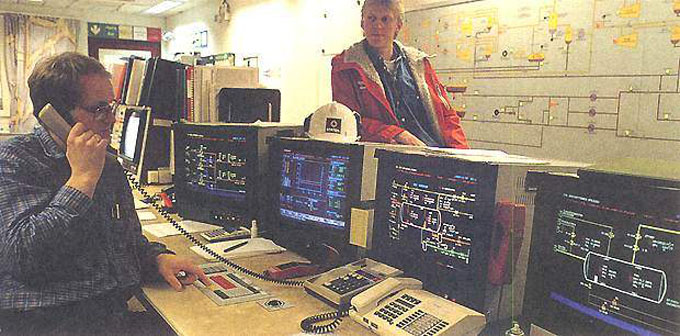
The Gullfaks field, discovered in 1978 and located in the northern North Sea, represents a major step forward in Norwegian offshore operations, particularly in digitalization and integrated field management. Production started in 1986, and the field was developed using three concrete platforms—Gullfaks A, B, and C—similar in concept to Statfjord but incorporating newer technology. Gullfaks reservoirs are complex, faulted Brent Group sandstones, requiring sophisticated geological understanding and reservoir modeling. The field is especially known for pioneering the use of advanced data integration, real-time monitoring, and digital oilfield concepts, which later became industry standards. Gullfaks has undergone several redevelopment phases, including subsea tie-ins, enhanced oil recovery methods, and extensive infill drilling, allowing it to remain economically viable for decades. Despite challenges such as pressure depletion and water breakthrough, the field has delivered substantial volumes beyond initial forecasts. Gullfaks stands as a strong example of how technology, continuous learning, and adaptive development strategies can maximize recovery from geologically complex reservoirs.
Oseberg
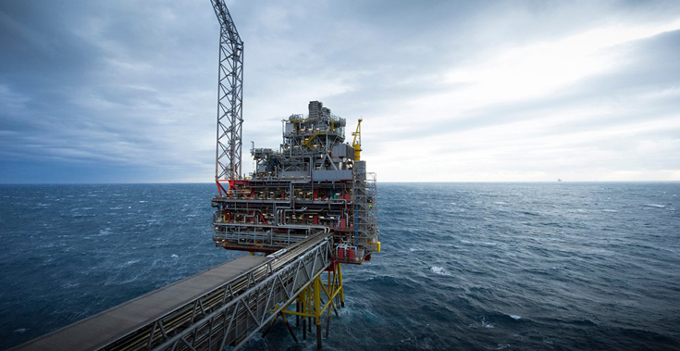
The Oseberg field, discovered in 1979 and brought on stream in 1988, is located in the northern part of the North Sea and is known for its high-quality reservoirs and efficient development. The field consists of several reservoir segments, primarily within the Brent Group, characterized by excellent porosity and permeability. Oseberg was developed using a combination of large platforms and subsea installations, with Oseberg A serving as the main processing and control hub. Early in its life, the field achieved very high production rates and strong recovery factors, benefiting from effective pressure support through water injection. Over time, gas handling and export became increasingly important, particularly with the development of Oseberg Gas Solutions, which integrated gas processing for nearby fields. Oseberg has been recognized for efficient project execution, strong safety performance, and early adoption of integrated operations. Although now a mature field, continuous optimization, late-life drilling, and tie-back of satellite discoveries have extended its lifespan. Oseberg remains a key contributor to Norwegian oil and gas production and infrastructure.
Troll
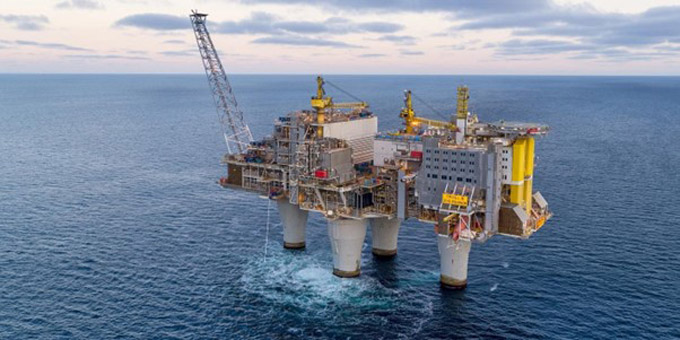
In partnership with Baker Hughes, Norsk Hydro began developing new drilling methods which are regarded as one of the big technological triumphs on the Norwegian continental shelf. Hydro could announce the completion of the first “genuine” horizontal well off Norway on 30 November 1989. And Troll became the largest oil producer on the Norwegian continental shelf in 2000.
Located in the northern North Sea and discovered in 1979, Troll contains enormous gas volumes in thin oil rims overlying a massive gas column. HM King Harald inaugurated the Troll Gas project on 19 June 1996 with a ceremony at the Kollsnes pipeline terminal in Øygarden outside Bergen. At the same time, the operatorship for the North Sea’s largest gas field was transferred from Norske Shell to Statoil. With the start to Troll production, Norway positioned itself in the Premier League as a gas supplier to Europe.
These discoveries made Norway a major supplier of oil and gas to Europe and strengthened Statoil’s reputation as a world-class offshore operator.
Clipping Statoil’s wings
Huge production from Statfjord and high oil prices caused many politicians to worry about Statoil’s size and influence. Fears were expressed that the company would become too dominant. The Conservative government resolved to limit the state oil company’s power by “clipping its wings”. A portion of Statoil’s holdings in almost every licence was accordingly transferred to the “state’s direct financial interest” (SDFI) in petroleum operations. That made the government a direct licensee in fields on the continental shelf, so that billions of oil kroner flowed straight to the Treasury.
By the end of the 1990s, Statoil had firmly established itself as Norway’s largest oil company with growing international interests.
Sleipner and CCS
The Sleipner field in the North Sea was the world's first offshore facility for carbon capture and storage, where CO2 has been stored under the seabed since 1996. The gas from Sleipner West contained too much CO2 and could not be sold as it was. To avoid burning the CO2 and thus paying the CO2 tax, the solution was to separate it out and pump it back into the reservoir.
Stock Market Listing and International Expansion (2000s)
The new millennium brought major changes. In June 2001, Statoil listed on the Oslo and New York Stock Exchanges, partially privatizing the company while the Norwegian state remained the majority shareholder (about two-thirds of shares). This marked a major shift toward international capital markets and increased commercial flexibility.
With its enhanced global profile, the company expanded operations beyond Norway. Statoil invested in oil and gas exploration and production in countries such as Algeria, Azerbaijan, the Gulf of Mexico, Nigeria, and Angola. The firm also became a significant trader and global seller of energy products, strengthening its international portfolio.
Merger and Transformation (2007–2010s)
A defining moment came on 1 October 2007, when Statoil merged with the oil and gas division of Norsk Hydro, another major Norwegian energy company. The merged entity became known initially as StatoilHydro, creating one of the world’s largest offshore oil and gas companies with deep technical expertise and a strong platform for global competition.
This merger significantly increased the company’s access to resources and operational scale, especially on the Norwegian Continental Shelf (NCS), and enhanced its position in international markets.
By the 2010s, Statoil had also begun exploring renewable energy technologies, including early leadership in floating offshore wind through projects like Hywind Scotland, which positioned the company as an innovator in renewable energy even while oil and gas remained its core business.
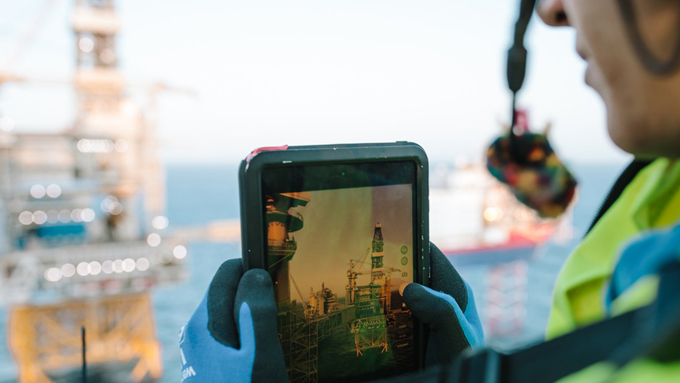
Rebranding to Equinor and Renewables Focus (2018)
In May 2018, Statoil undertook a strategic rebranding, changing its name to Equinor. This new name blends “equi-” (suggesting equality and equilibrium) and “-nor” (reflecting its Norwegian roots). The rebrand was designed to signal the company’s broader identity as an integrated energy company, not just a traditional oil firm, and its commitment to participate in the evolving global energy system.
Alongside the name change, Equinor renewed its strategic emphasis on:
- Sustainable energy solutions
- Offshore wind
- New technologies like carbon capture and storage (CCS)
While oil and gas remained central to value creation, the company publicly set ambitions for net-zero emissions by 2050, aligning with broader industry and policy shifts.
Recent Developments (2020s)
In the 2020s, Equinor has continued to adapt to changing global energy markets:
Energy Transition Efforts
Equinor has maintained investments in renewables and low-carbon projects — including offshore wind and CCS infrastructure — as part of its broader energy transition strategy. However, in recent years it has also rebalanced investments, tightening focus on profitable oil and gas projects while moderating its renewables targets due to market conditions and strategic priorities.
Strategic Importance of Gas
European energy security concerns, especially after the 2022 energy crisis, reinforced the importance of Equinor’s gas portfolio, as Norway supplies large volumes of natural gas to European markets.
Ongoing Operations and Challenges
Equinor faces both opportunities and challenges as a multi-national energy player:
- It plays a key role in oil and gas exploration and production across about 36 countries.
- It is engaging in litigation related to offshore wind permit issues in the US, reflecting geopolitical tensions in energy development.
- Critics and regulators remain focused on environmental performance and transition accountability.
Legacy and Global Impact
From its start as a state-owned company designed to manage Norway’s oil boom, Equinor evolved into a globally significant energy company. Its history reflects:
- Norway’s emergence as a major energy exporter
- Technological leadership in offshore oil, gas, and floating wind
- Adaptation to global energy transitions
- Expansion into international markets
Today, Equinor remains central to Norway’s economy and a major source of energy globally — balancing traditional hydrocarbon production with a strategic pivot toward lower-carbon energy solutions for the future.
KeyFacts Energy: Equinor Norway country profile l KeyFacts Energy: Energy History

If you would like a complimentary 7-day trial to our Energy Country Review resource, free access to our daily news alert service, details of marketing opportunities or if you would like to contribute to KeyFacts Energy, click here. We can provide access, sign you up, send full details or set up a quick online meeting to review our services in more detail.